

Essential details
MOQ:1
Shipping:Sea freight
Product Introduction
The dummy model complies with the SAE J826-2002 standard for 50th percentile back and buttock contour models.
Load mass: The total load mass of the equipment is 44.5 kg.
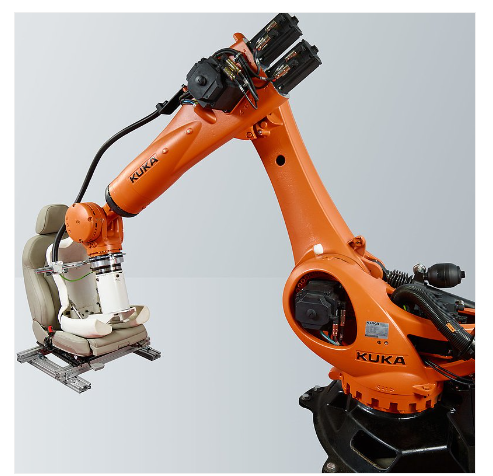
Test Method: Simulation of a human entering and exiting a seat a) Prepare an impact head manufactured from a 3D dummy model conforming to the 50% SAE J826-2002 standard. Wrap the impact head with a 12 mm layer of foam and denim, and attach appropriate weights to the impact head to maintain a total mass of 44.5 kg. b) Secure the seat assembly to the simulated human entry/exit test bench. Adjust the seat to its design position. Program the robot to simulate the trajectory of a person entering and exiting the seat:
1) The impact head slides horizontally into the seat and sinks approximately 25 mm into each of the seat cushion side wings and backrest side wings. Rotate the impact head 30° so that the inner rear portion enters first;
2) The test head continues to enter until its centerline aligns with the seat’s centerline;
3) The test head creeps to stabilize its position within the seat;
4) The test head sinks into the seat until the load reaches 445 N;
5) The test head creeps along the backrest at an angle of approximately 30° while maintaining a load of 445 N;
6) The indenter remains in the seat at a load of 445 N until it is halfway out of the seat;
7) Once the indenter is halfway out of the seat, it slides along the seat cushion side wings; as the indenter exits, the seat cushion side wings exhibit significant indentation. Test frequency: 4.5 cycles/min. The test consists of 15,000 cycles simulating human entry and exit. For the bumping and creep test, secure the test specimen to the platform of the bumping and creep testing machine. Adjust the specimen so that the centerline of point H aligns with the centerline of the simulated buttocks or back; adjust the height of the simulated buttocks or back. The simulated buttocks and back are configured in accordance with the 50% requirements for simulated buttocks and back specified in SAE J826—2002. The vibration amplitude (peak-to-peak) is 30 mm. The vibration and creep tests verify the fatigue life of the seat frame, foam, and upholstery. At a frequency of 100 cycles per minute, 100,000 vibration cycles are performed on the seat cushion and 50,000 cycles on the seatback. After testing, the samples should show no abnormalities; the seat frame must show no cracks, the foam must show no deformation, and the fabric and padding must show no damage; the maximum variation at the H-point must remain within the rated range; Fabric abrasion resistance testing for upholstered seats is conducted using a test simulating a person getting in and out of the seat. The test involves 15,000 cycles of the entire seat simulating this motion. After testing, the seat cover must not show any tears, clumping, unraveling, or exposure of the backing material; no damage is permitted, and the stitching must not break.